Definitions and Basic Properties of Idempotents
Definition
Let be a ring with identity. An idempotent in is a non-zero element with .
Facts.
- is a ring with identity , where .
- For any , for some and then .
Definition
Two idempotents are called orthogonal if . More generally, idempotents are called pairwise orthogonal if for any .
- An idempotent is called primitive, if it is not a sum of two orthogonal idempotents.
- An idempotent decomposition of an idempotent is a representation , where are pairwise orthogonal. If moreover are primitive, then the decomposition is called a primitive idempotent decomposition.
Remarks.
- If are orthogonal idempotents, then is also an idempotent.
- For with , is a idempotent decomposition.
Modules Generated by Idempotents
Theorem
Let be an idempotent of .
- If is an idempotent decomposition, then as left ideals or left -modules.
- Conversely, if is a direct sum of left ideals of , , then there is an idempotent decomposition with and .
In this way, the idempotent decompositions of are in bijection with the direct sum decompositions of the left ideals .
\begin{proof}
Let be an idempotent decomposition. Then yields that . For any , . So . For another expression , note that . So the expression is unique.
Conversely, let . Since , can be written as with . For any , note that
where . Since is a direct sum, the decomposition of is unique and so and for any . Take , then is idempotent and . Therefore, is a idempotent decomposition.
\end{proof}
Corollary
Let be an idem of . TFAE:
- is primitive;
- is indecomposable as a left -module;
- is the unique idempotent in .
\begin{proof}
i)←>ii) is easy.
i)→iii) Suppose such that and . Then is a decomposition, which contradicts with primitive.
iii)→i) If is an imprimitive idempotent in , then , because and , which is impossible.
\end{proof}
Theorem
Let be idempotents of , and let be an -module.
- . In particular, as abelian groups.
- as rings.
\begin{proof}
i) Let , then . Consider the map , .
Note that
- for any . So is determined by and so is injective.
- Take arbitrary . For a -homomorphism , . So is surjective.
Therefore, .
ii) Define . For , we have
and so .
\end{proof}
Theorem
Let be idempotent of . TFAE:
- as left -modules.
- as right -modules.
- There exist and with , .
\begin{proof}
Here we only prove i) and iii) are equivalent.
i)→iii) Let be an -isomorphism. Set and . Then we have
Note that
and we can similarly prove that
iii)→i) Assume that there exist and with and . Since , there is . Define and . Then we can check that and .
- For any , we have .
- For any , we have .
Now we finish the proof.
\end{proof}
Lifting Idempotents Over Nilpotent Ideals
Definition
Let be a -sided ideal of , and let is an idempotent of . If is an idempotent in , we say lifts .
If there is an idempotent lifting for every idempotent of , then we say we can lift idempotents from to .
Theorem
If is a nilpotent ideal of , then we can lift idempotents from to . Moreover, if is a primitive idempotent, then any idempotent lift of is also primitive.
\begin{proof}
Suppose is idempotent in . Consider its preimage and define . Note that is also an idempotent in .
We have that and . So there is some such that . Since
we have is nilpotent and then is invertible in , whose inverse is with . Notice that , and commutes with and (since does).
Finally, we have . It deduces that
where by definition of . Also note that . Therefore, is what we desire.
Suppose is primitive and has an idempotent decomposition . Then with . Since is primitive, one of is and so WLOG and so . It contradicts with idempotent.
\end{proof}
Corollary
Let be a two-sided nilpotent ideal or , and let be an idempotent decomposition in . Then there is an idempotent decomposition in with . If are primitive, so are .
\begin{proof}
Induction on . When , it is trivial, and now we assume that it holds for .
Define , then is idempotent and in . We lift to and define . Then is a lift of .
Note that is the identity of the ring , and is a nilpotent ideal of . Consider the composition homomorphism
whose kernel is . There is , because
- for any , .
So we get an inclusion , and its image is . As has identity , by induction hypothesis one have with for . Thus and we finish the proof.
\end{proof}
Corollary
Let be an idempotent in a ring that has a nilpotent ideal . Then is primitive in iff is primitive in .
Structure of Artinian Rings and their Modules
Lemma
Let be a semisimple Artinian ring.
- There is a primitive idempotent decomposition . This corresponds where is simple.
- For every simple -module , there is a primitive idempotent with .
- for any simple -module , there exists , . If is a simple -module with , then .
\begin{proof}
i) Recall that there is a bijection between the idempotent decomposition of are in bijection with the direct sum decomposition of the left ideals . Since is semisimple and Artinian, there is a decomposition and . By ^tv7l9r, is simple.
ii) Since each simple -module is a quotient of the left regular module by ^09efb3, is isomorphic to for some primitive idempotent .
iii) Notice that , and there exists such that . For any given simple -module , there exists such that . By ^yr2ffd, one have
if . Now we finish the proof.
\end{proof}
Theorem
Let be an Artinian ring, and let be a simple -module.
- There is an indecomposable projective -module with of the form where is a primitive idempotent in .
- The idempotent has the property that , and if is any simple module with then .
- is the projective cover of , it is uniquely determined up to isomorphism by .
\begin{proof}
Let be a primitive idempotent element such that , and let be any lift of to . Then and is primitive by ^84f4de. Since annihilator all simple modules, by ^drcz17 we know and for any simple module .
Since , by ^1dezlm one can check and is a direct sum of a free module . Hence, is a indecomposable projective module by ^3rkmd6. Set , and notice that
is an -morphism with kernel . Then and is a projective cover of .
\end{proof}
Theorem
Let be an Artinian ring.
Up to isomorphism, the indecomposable projective -modules are exactly the module that are the projective covers of simple modules, and iff .
Each appears as direct summand of (left regular module) with multiplicity equal to the multiplicity of as a summand of . Precisely, , where runs through simple -modules up to isomorphism, and with .
\begin{proof}
Let . Since is Artinian, is an Artinian semisimple ring. Hence by ^drcz17, one have a primitive idempotent decomposition in . By ^3rmbjt, lift each to an idempotent and so in . Thus, the regular module decomposes as , where each is an indecomposable projective module. By ^koarlo, we know is a simple -module and hence a simple -module. So each is the projective cover of some simple module , and every such cover arises this way.
Now let be any indecomposable projective -module. Then , where each is a simple module. On the other hand, is also a projective cover. By the uniqueness of projective covers, it follows that
Since is indecomposable, we must have , and so for some simple module . Therefore, every indecomposable projective is isomorphic to some .
Finally, since is semisimple, we have and , where by ^8omj6z, as desired. Now we finish the proof.
\end{proof}
Cartan Matrix
Theorem
Let be an Artinian ring, and let be a primitive idempotent of . Define . In any finitely generated -module , the multiplicity of in is equal to the composition length of as an -module.
\begin{proof}
Since is an Artinian ring and is a finitely generated -module, we know has a finite length composition series by ^u3of0p. Notice that is primitive by ^lz95r0.
Let be a composition series of . Consider the chain of -modules
where iff . Furthermore,
By ^yr2ffd, is a division ring by Schur’s lemma. Since , we know is a simple -module. Therefore, the multiplicity of in any finitely generated -module is equal to the composition length of as an -module.
\end{proof}
Remark. For a primitive idempotent with Artinian ring , is a local ring.
- We claim that .
- Since is an ideal of , is an ideal of .
- For any , there is for some . Since is Artinian, is nilpotent and so is nilpotent. It deduces that .
- On the other hand, is semisimple and so .
- We claim that is local.
- By ^yr2ffd, is a division ring by Schur’s lemma.
- Since , we know is a maximal ideal and is local.
Let be a primitive idempotent decomposition in , and let be a primitive idempotent decomposition in with .
Definition
We denote by the multiplicity of in , which is called the Cartan variant in . The matrix is called the Cartan matrix of .
Theorem
iff .
\begin{proof}
It is a direct corollary of ^3hxo3d.
\end{proof}
For convenience, if and are two simple -modules, we denote the corresponding Cartan invariant by , i.e., the multiplicity of in .
Proposition
Let be a finitely generated -algebra over a field , and let be a simple -module with projective over . Let be a finitely dimensional -module.
- If is a simple -module, then
- The multiplicity of in is .
- If is an idempotent, then .
- Let and be idempotents so that and are projective covers of and . Then
If moreover , then .
\begin{proof}
i) If is nonzero, then the kernel must be a maximal submodule, containing . But , so . Note that there is a commutative diagram
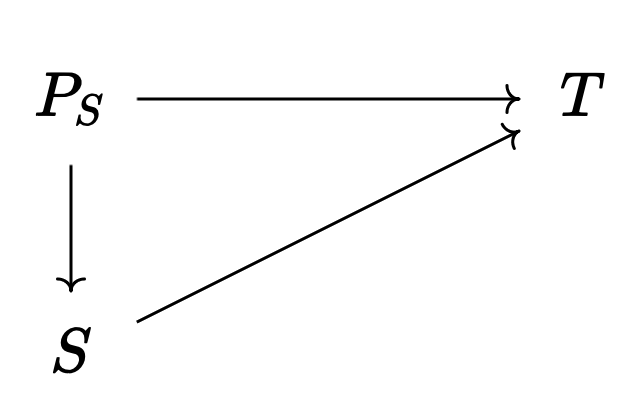
one have .
ii) is trivial by i).
iii) is trivial by ^yr2ffd.
iv) is trivial by iii) and note that by Schur’s lemma.
\end{proof}
From Residue Field to Algebra: Lifting Decompositions
Let be a complete discrete valuation ring with valuation , and let with be residue field of respectively.
Let be an -algebra, which is finitely generated as an -module. Then is a finitely generated -algebra. The following theorem shows that and are topologically equivalent (see here and here), since .
Theorem
Let be finitely generated -algebra. Then
- ;
- for some .
\begin{proof}
i) Let be a simple -module. Then either or . Since for any and is finitely generated over , we know is finitely generated over . Thus if , then by Nakayama lemma. So and .
ii) Define . Then . Since is a finite-dimensional -algebra, we have is Artinian and is nilpotent. It deduces that for some .
\end{proof}
lifting of isomorphism
Let be a finitely generated -algebra. Let be an ideal of with and .
- Let be an idempotent in , and let be an idempotent decomposition in . Then lifts to an idempotent of and there exists orthogonal idempotent of satisfying and .
- An idempotent of is primitive iff is primitive in .
- Let be primitive idempotent of , then iff .
\begin{proof}
Note that yields for some . Hence for all , and set Set .
i) Since is an nilpotent ideal in , by ^84f4de, lifts to a idempotent of , namely, there exists such that and . Next, is a nilpotent ideal in , and there exists such that and . Repeat this procedure, then is a Cauchy sequence and exists. One can check that is an idempotent of that lifts to .
Similar as the above arguments, there exists for each such that , and is an idempotent decomposition in . Each is a Cauchy sequence. Let . Then satisfy our requirement.
ii) Similar as
If is a nilpotent ideal of , then we can lift idempotents from to . Moreover, if is a primitive idempotent, then any idempotent lift of is also primitive.
Link to original
iii) One can prove that is the projective cover of (omitted), then by ^9so7ao we finish the proof.
\end{proof}
Remark. Let , then where is an -algebra, is an -algebra and is a -algebra.